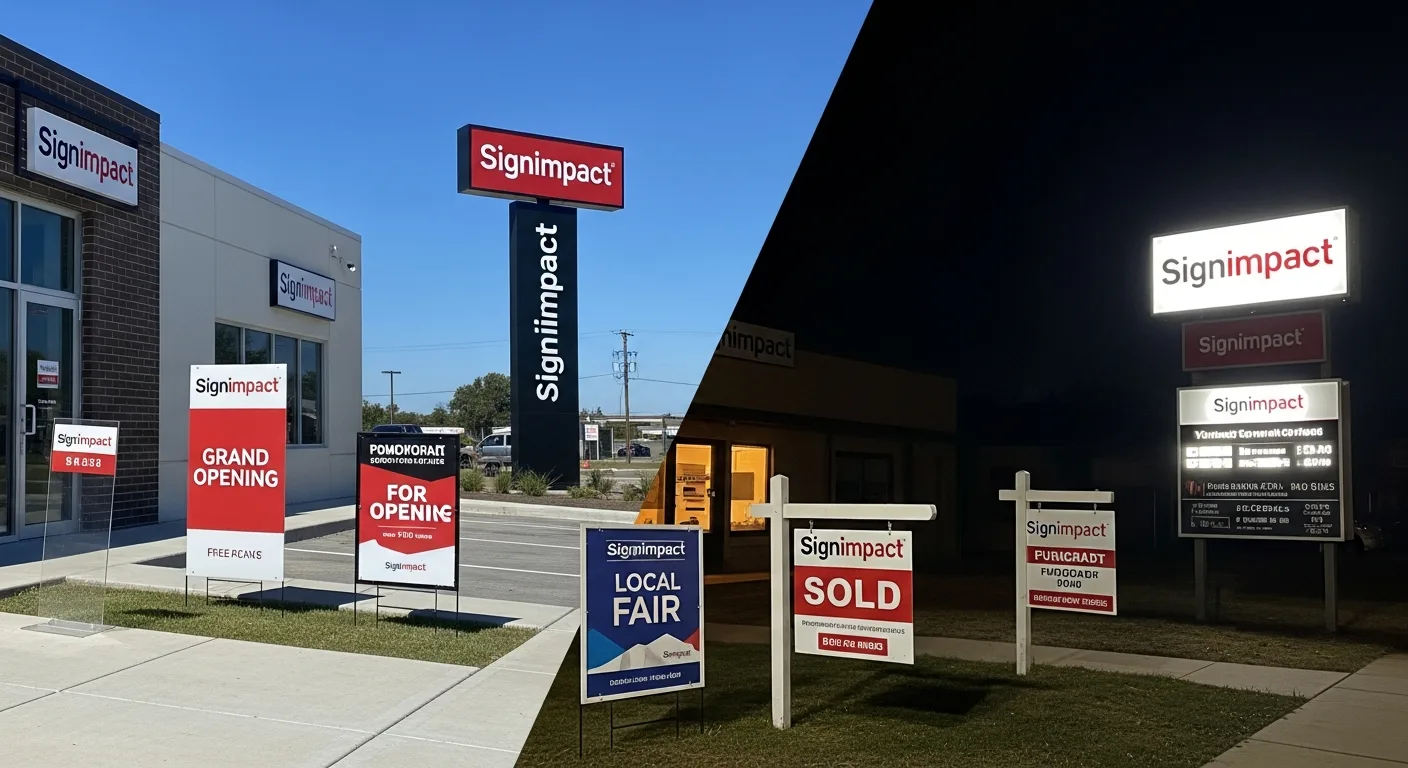
Outdoor signage is the workhorse of your physical brand presence. Whether you want to attract passing traffic, guide visitors on-site, or launch a new location, strategic outdoor signs are essential to effective custom business signs. In this deep dive, we break down four high-impact categories—freestanding, promotional, real estate, and lighting—so you can make confident, ROI-focused decisions for your Ontario business. This article builds on the foundation set in our flagship resource, “The Ultimate Guide to Custom Business Signs and Business Sign Services.”
Based in Milton, ON, and serving businesses across Ontario, Signimpact handles design, permitting, fabrication, and installation under one roof. With local code knowledge and full-service support, we help you translate brand strategy into outdoor signage that looks excellent, performs reliably, and complies with municipal bylaws and the Electrical Safety Authority (ESA).
What Makes Outdoor Signs Work for Custom Business Signs
Every outdoor sign should earn its real estate. Before diving into formats, align on function, visibility, and compliance, especially if your end goal is cohesive custom business signs that work together across touchpoints.
- Function: Do you need awareness (attract new customers), wayfinding (move people safely and efficiently), or conversion (drive entry or calls)?
- Visibility: Consider speed of traffic, viewing distance, mounting height, and sightlines. A large pylon may suit a highway, while a monument sign fits pedestrian corridors.
- Legibility: Adequate letter height, clean typography, and high contrast color can significantly impact readability. [Source]
- Durability: Ontario’s winters, UV exposure, and freeze/thaw cycles demand the right substrates, paints, and protective finishes.
- Compliance: Municipal sign permits, landlord approvals, locates, and ESA requirements for illuminated signs are standard steps.
Planning these fundamentals upfront improves the performance of your custom business signs and reduces their management costs over time.
Freestanding Signs: Pylon, Monument, and Post and Panel
Freestanding signs anchor your location identity when building-mounted signage isn’t enough or allowed. In Ontario plazas, industrial parks, and freestanding buildings, you’ll typically encounter three formats:
1) Pylon Signs
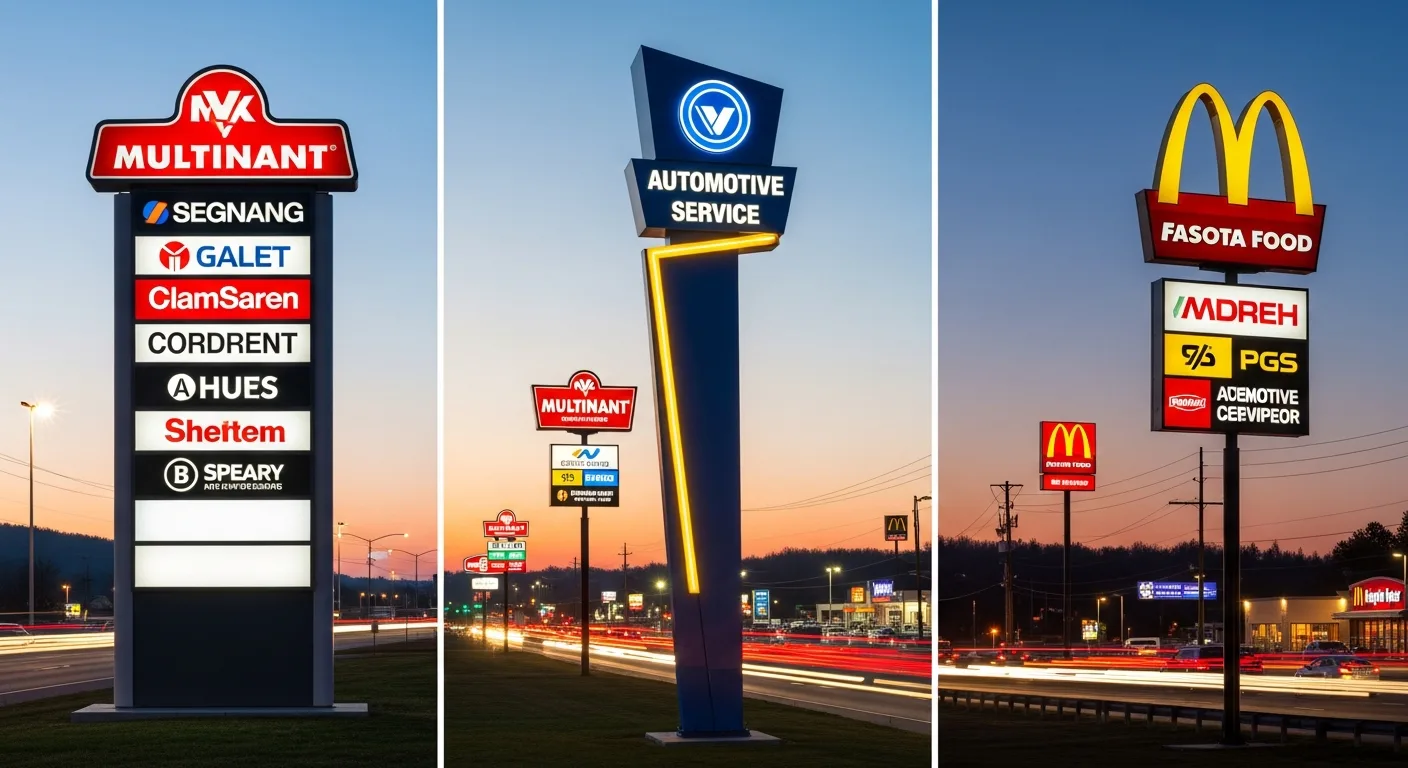
Pylon signs elevate your brand for long-range visibility, often above parked cars and landscaping. Custom business signs are common along highways and high-traffic arterials throughout the GTA and beyond.
- Best for: Multi-tenant plazas, automotive corridors, retailers near fast-moving traffic.
- Structure: Steel posts with engineered foundations; cabinets or channel letter faces; often internally illuminated with high-efficiency LEDs.
- Visibility: Ideal for 60 to 80 km/h roads where reading time is limited.
- Permitting: Requires engineered drawings, municipal sign permits, and ESA authorization for electrical components in Ontario.
2) Monument Signs
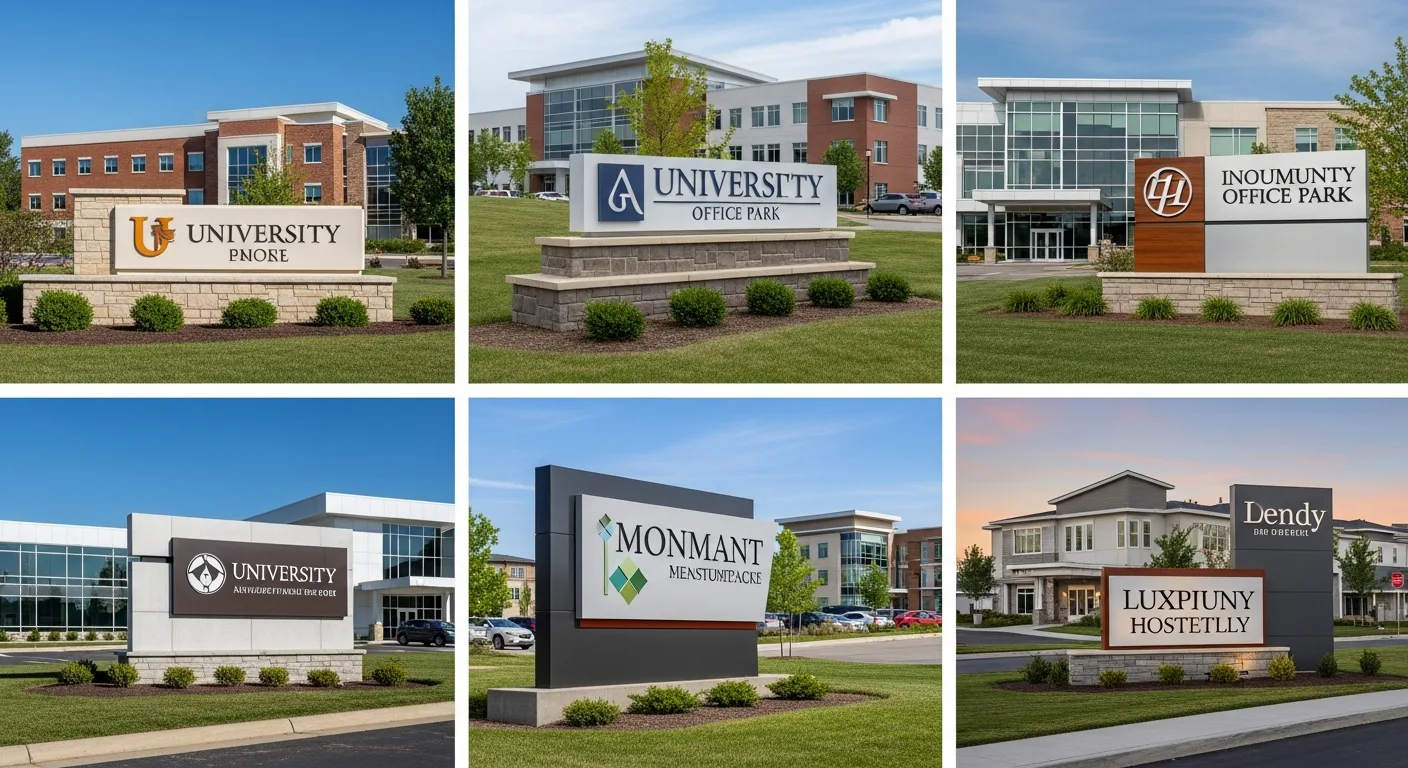
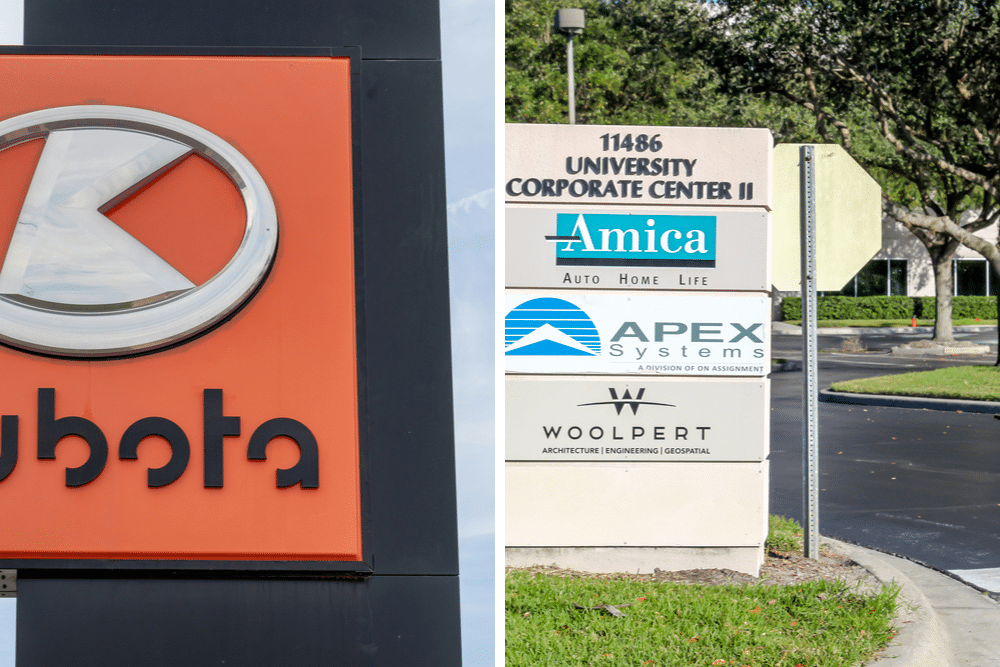
Monument signs sit lower to the ground for a premium, architectural feel. They complement campuses, office parks, healthcare, and hospitality sites across Milton, Oakville, Burlington, Kitchener-Waterloo, and similar contexts.
- Best for: Professional services, residential communities, schools, and corporate entrances.
- Design features include dimensional lettering, aluminum cladding, masonry accents, and LED lighting.
- Wayfinding: Can integrate tenant listings and directional cues at driveways.
- Durability: Built to withstand snowplow spray, salt, and freeze/thaw cycles with proper finishes and drains.
3) Post-and-Panel Signs
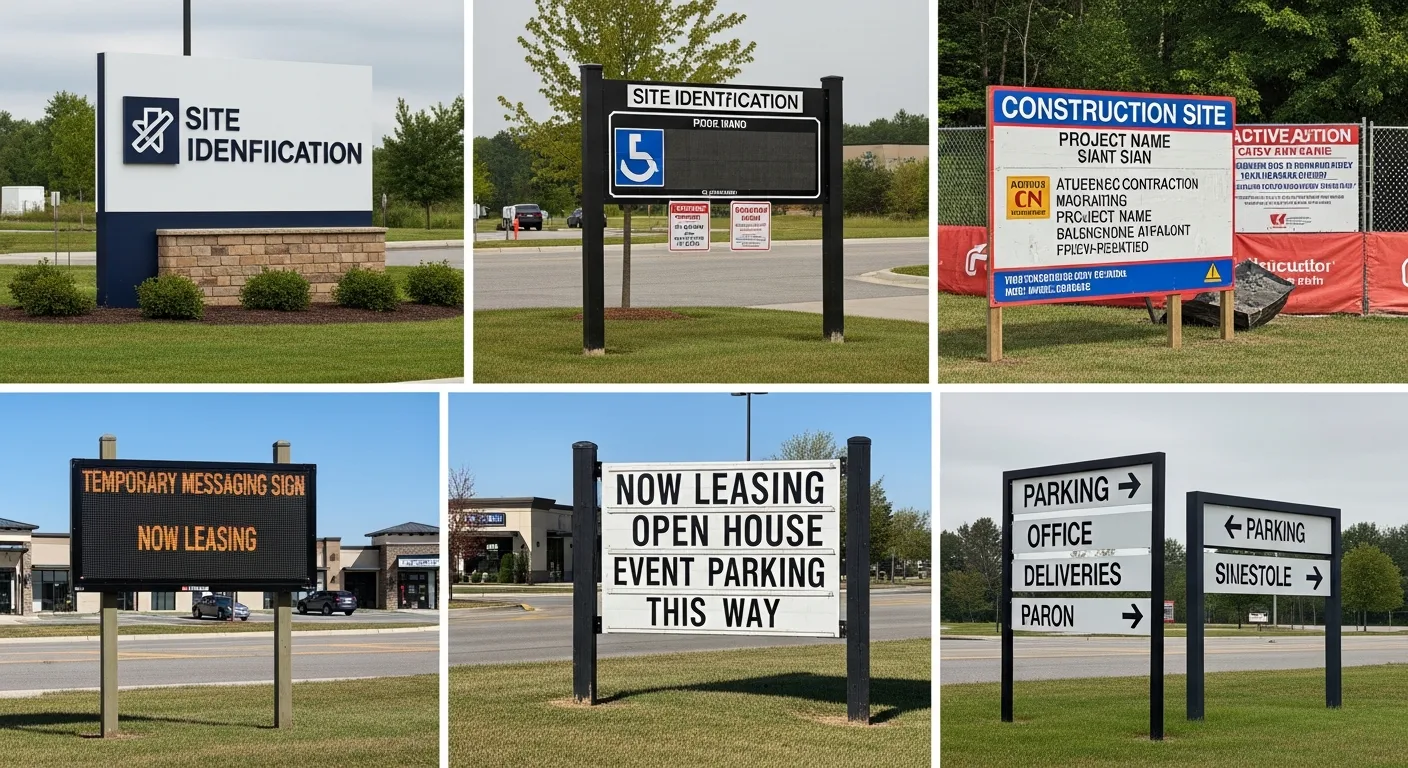
Cost-effective and versatile, post and panel custom business signs deliver quick impact for single tenant sites, construction zones, and temporary wayfinding.
- Best for: Site identification, construction sites, temporary messaging, and directional signage.
- Materials: Aluminum panels, composite substrates (ACM), and treated posts; reflective vinyl optional for nighttime visibility.
- Speed to install: Often faster permitting and simpler footings than pylons or monuments.
| Type | Primary Use | Visibility Range | Illumination | Typical Timeline | Notes
|
|---|---|---|---|---|---|
| Pylon | Highway/arterial brand ID | Long-range | Internal LEDs common | 6–12+ weeks (permit dependent) | Engineering & ESA typically required |
| Monument | Premium site identity | Medium range | Internal or external | 5–10+ weeks | Architectural detailing options |
| Post-and-Panel | Economical ID/wayfinding | Short to medium | Usually non-illuminated | 2–6 weeks | Great for temporary or phased projects |
Pro tip: Ontario’s frost line and wind loads matter. Foundations and fasteners must be engineered to local codes, so your sign stands up to winter and summer storms. Signimpact coordinates engineering, locates it, then fabricates and installs it to specification.
Promotional Outdoor Signs: Banners, A-Frames, and Event Displays
Promotional signage is your short-term boost, ideal for openings, seasonal events, and sales. These tools help you capture immediate attention without the cost of permanent structures.
1) Vinyl Banners and Fence Wraps
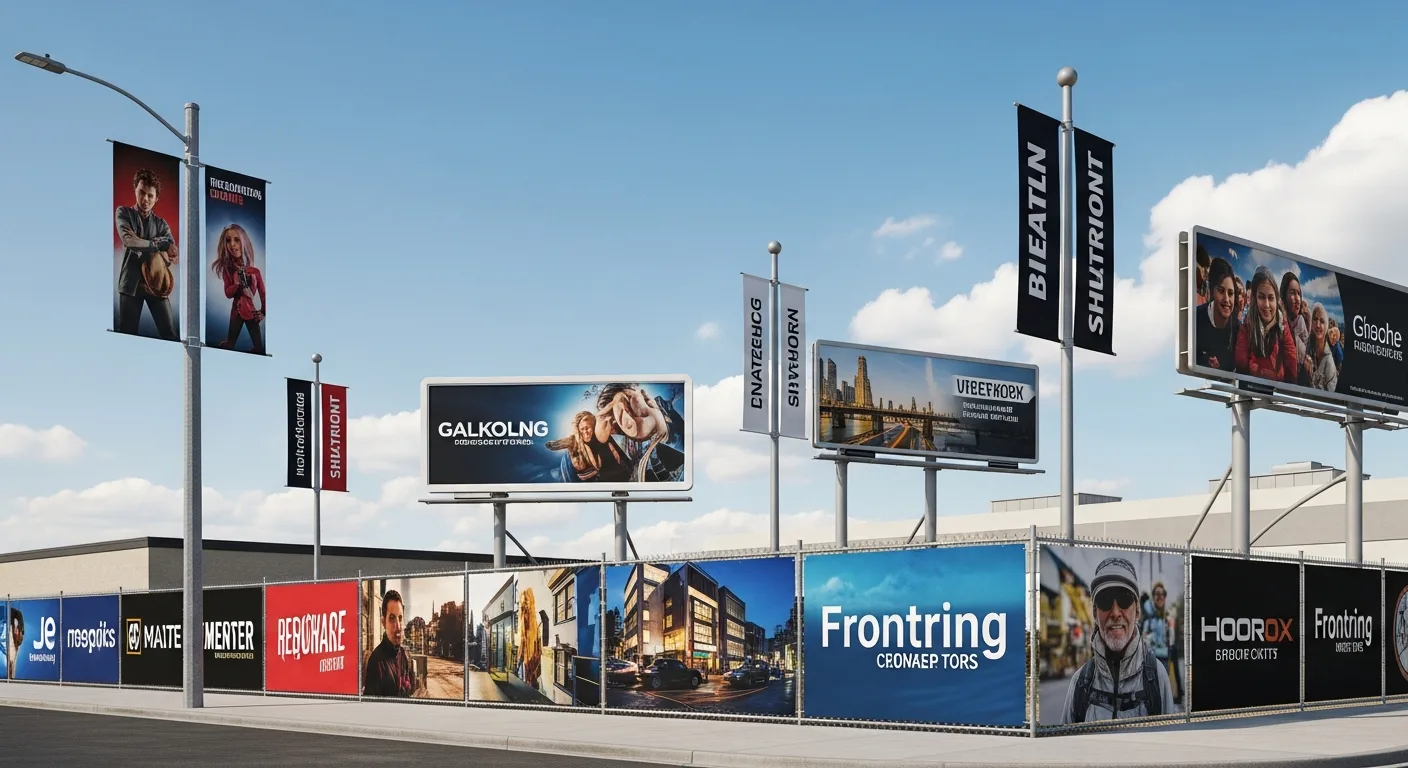
- Use cases: Grand openings, seasonal promos, jobsite branding, and sponsor displays.
- Options: Mesh for windy sites, blockout vinyl for double-sided graphics, reinforced hems, and wind slits where appropriate.
- Best practice: Keep copy minimal and bold. Prioritize brand, offer, and a single call to action.
2) A-Frames and Sidewalk Signs
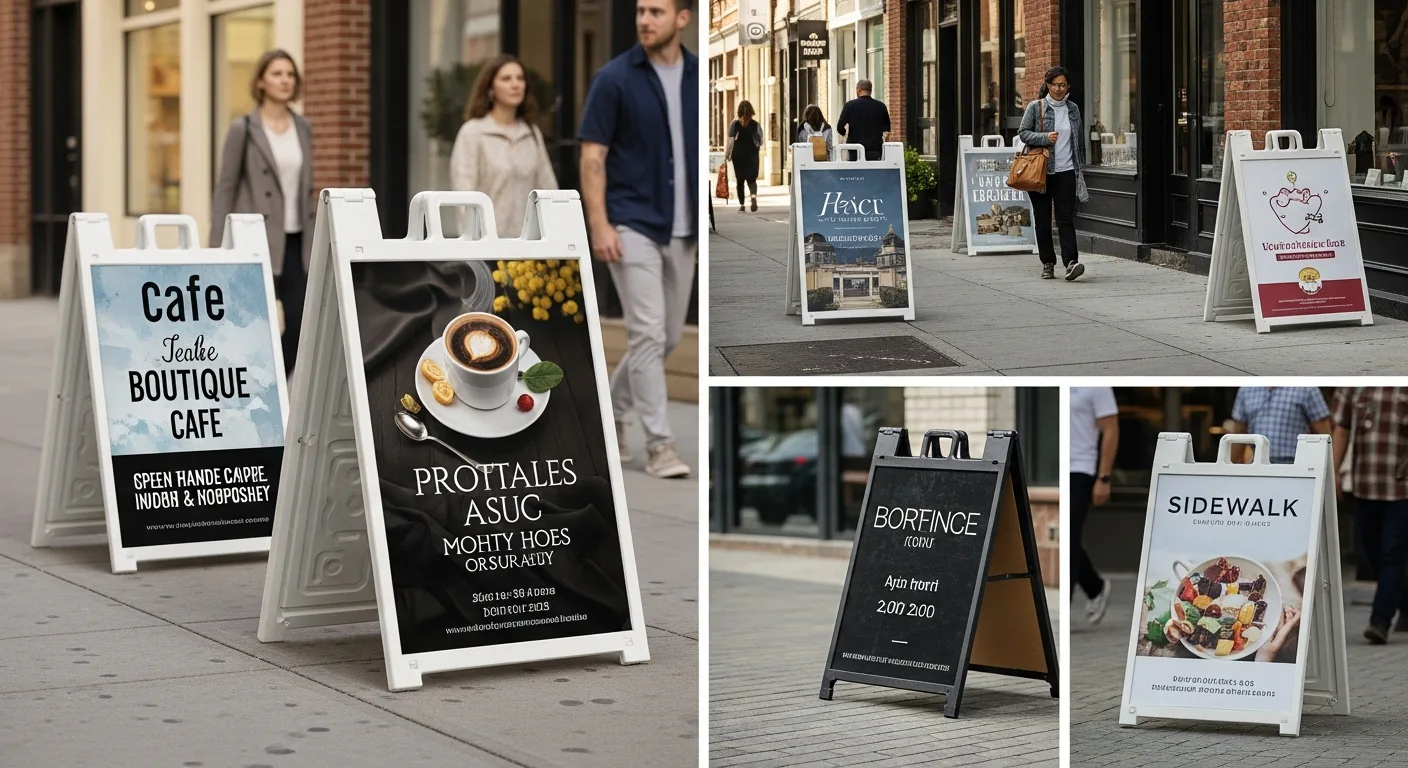
- Use cases: Cafes, salons, and boutiques on pedestrian-heavy streets across Milton, Toronto, and Hamilton.
- Materials: Plastic, metal, or wood frames; interchangeable coroplast or ACM panels.
- Compliance: Many municipalities limit sizes, placements, and hours. Review local bylaws; Signimpact advises per city to keep you compliant.
3) Feather Flags and Portable Displays
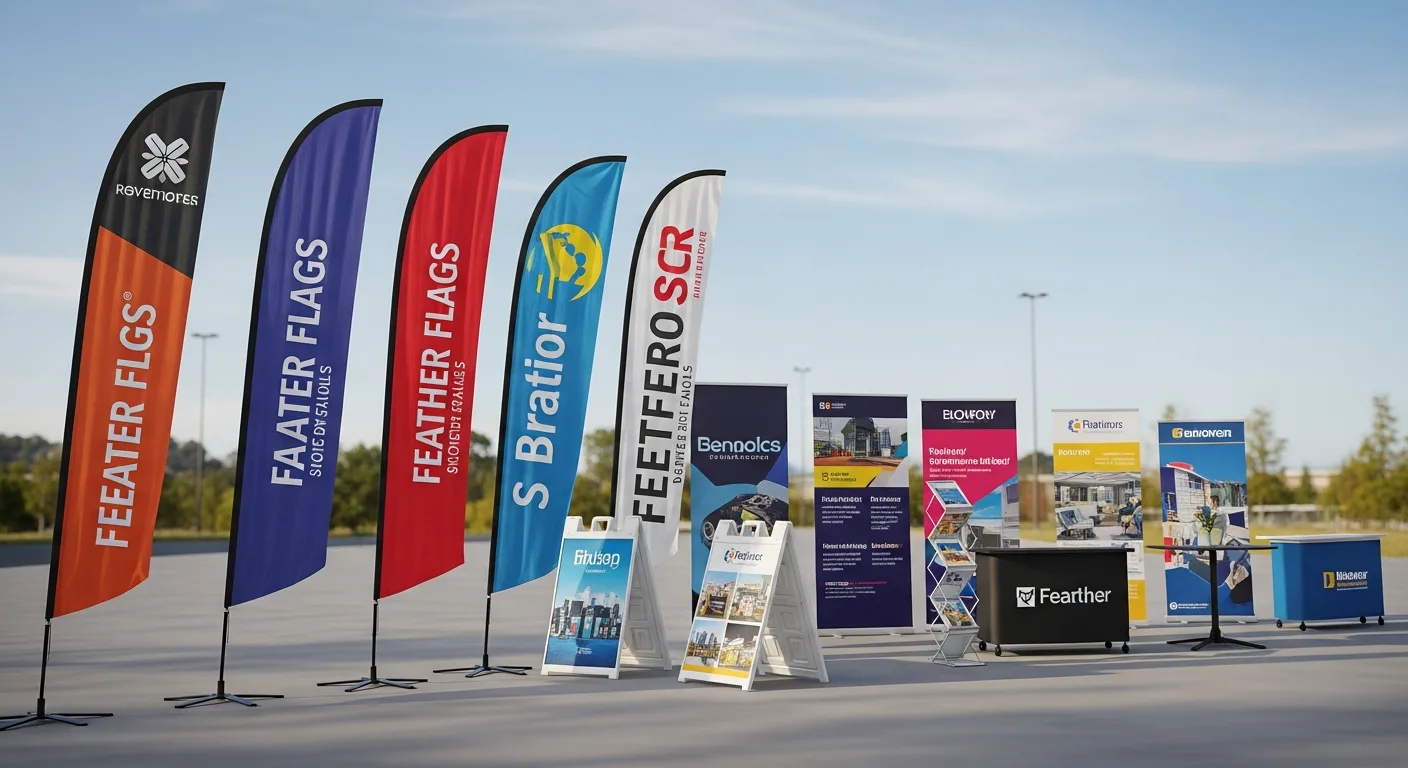
- Use cases: Car dealerships, events, and seasonal promotions.
- Benefits: Eyecatching motion and color at a low cost.
- Anchoring: Weighted bases or ground spikes ensure safe placement and clear pedestrian pathways.
Temporary doesn’t mean disposable. With strategic design and proper storage, promotional pieces become a reusable toolkit that supports your broader custom business signs program.
Real Estate and Development Signs: From Lot to Lease Up
Across Ontario, real estate and development signage is crucial for pre-sales, construction safety, and lease-up visibility. Clear, on-brand signs make projects look organized and credible.
1) Residential and Commercial For-Sale/For Lease
- Formats: Post-and-panel signs, oversized site boards, rider panels, and directional arrows.
- Graphics: Consistent branding, high-contrast contact information, and QR codes for listings.
- Durability: UV-stable inks and laminates fight fading during longer sales cycles.
2) Construction and Development Sites
- Hoarding graphics: Turn fencing into a brand wall with project renders and leasing details.
- Safety and wayfinding: Integrate compliant safety signs, site maps, and directional arrows to manage trades and visitors.
- Permits and approvals: Larger boards and long-term installations may require permits and landlord/owner approvals.
Signimpact supports developers and brokerages with the concept to install services, including phased rollouts for multi-stage projects and site surveys across Milton, the GTA, Waterloo Region, and beyond.
Lighting Strategies for Exterior Signage
Lighting is often the final 20% that delivers 80% of the visibility for custom business signs. The right light improves legibility after dusk, boosts safety, and supports brand impressions.
1) Channel Letters
- Front-lit: The most common option for bright, direct face illumination for maximum readability.
- Halo-lit (reverse channel): Elegant glow that outlines letters on the wall; excellent for premium brands.
- Combination: Dual-lit letters blend face and halo effects for standout visibility.
2) Cabinet Signs and Push-Through Acrylic
- Cabinets: Fully enclosed, internally lit faces; ideal for changeable tenant listings or logos.
- Push-through: Routed aluminum faces with acrylic letters push through for crisp edges and depth.
3) External Lighting
- Gooseneck or flood lighting: A classic approach to illuminate non-electrical signs like monuments and post-and-panel.
- Controls: Photocells, timers, and dimming maximize efficiency and ensure nighttime consistency.
| Lighting Type | Look & Brand Feel | Visibility | Energy Use | Maintenance | Notes
|
|---|---|---|---|---|---|
| Front-lit Channel Letters | Bold, modern | High | Low (LED) | Low | Great for busy roads |
| Halo-lit Channel Letters | Premium, elegant | Medium-High | Low (LED) | Low | Ideal on smooth backgrounds |
| Cabinet Signs | Versatile, changeable | High | Low–Medium | Low–Medium | Good for multi-tenant |
| External Fixtures | Classic/traditional | Medium | Low–Medium | Low | When internal lighting isn’t an option |
Important in Ontario: Electrical signs require ESA authorization. LED retrofits can often improve efficiency and brightness in existing cabinets and channel letters without replacing the entire sign body. Ask custom business signs to assess your current hardware and propose a retrofit plan that aligns with your brand standards and local code.
Permits, Codes, and Compliance in Ontario
Compliance is an opportunity to build a safer, long-lasting signage program. In municipalities across Ontario, here’s what typically applies:
- Municipal sign permits: Required for most permanent signs. Applications may need site plans, scaled drawings, structural details, and landlord consent.
- Engineering: Freestanding signs (and many wall signs) require stamped structural drawings to address wind loads, frost depth, and anchoring.
- ESA authorization: Any electrical/illuminated sign in Ontario must meet ESA requirements. This includes new installs and retrofits.
- Locates: Before digging, utilities must be located to prevent underground strikes.
- Bylaws and restrictions: Height, area, setbacks, illumination, and temporary signage rules vary by municipality.
Signimpact handles permitting and ESA coordination across the province, reducing delays and change orders. If you’re opening in multiple Ontario cities, we can standardize your custom business signs package and adapt it for each local code environment.
Design Best Practices That Boost Readability and Recall
Design decisions are multipliers for outdoor performance. A few proven principles improve legibility and brand recall:
- High contrast: Dark text on a light background or vice versa. Avoid busy patterns behind copy.
- Typeface choice: Use clean, sans-serif fonts for distance reading. Reserve decorative fonts for large logos or short headlines.
- Hierarchy: Prioritize brand, key message, and one CTA. Too much copy reduces readability.
- White space: Give letters breathing room for clarity at speed.
- Letter height: a scale type for viewing distance and speed.
When Signimpact designs outdoor assets, we test contrast and scale against actual site photos and distances. That way, your custom business signs are built for real-world conditions, not just screen mockups.
Installation and Maintenance for Long-Term Performance
A well-planned installation protects your investment and keeps your signs looking their best.
- Site survey: Measure sightlines, confirm mounting surfaces, and identify obstructions like trees and utilities.
- Foundations and anchoring: Engineer footings for frost and wind; use corrosion-resistant hardware.
- Electrical: Route power safely and meet ESA requirements; set photocells and timers for consistent operation.
- Maintenance plan: Schedule cleaning, LED checks, and touch-ups. Plan for seasonal snow clearance around the monument and post-and-panel signs.
Signimpact’s installation teams operate across Ontario, coordinating equipment, traffic control, and weather windows to put your custom business signs live on schedule.
Budgeting and Timelines: What to Expect
Scope, materials, lighting, and site conditions drive cost and timelines. While every project is unique, expect permanent freestanding signs to require more planning and lead time than temporary or non-illuminated options. For complex sites or multi-tenant pylons, permitting and engineering typically extend timelines.
- Design: 3 to 15 business days depending on revisions and landlord approvals.
- Permitting: Varies by municipality; allow several weeks, especially for engineered structures.
- Fabrication: 2 to 6+ weeks, depending on shop capacity and materials.
- Installation: 1 to 3 days per sign in most cases; longer for multi-phase or large pylons.
Working with one partner from concept to installation reduces change orders and helps keep budgets predictable. Signimpact can value-engineer options to meet your goals without sacrificing brand or longevity.
How Signimpact Delivers Outdoor Signage, End-to-End
- Discovery & Site Survey: We align on objectives, audience, and viewing conditions. Custom business signs verify measurements, power access, and structural considerations.
- Design & Brand Alignment: We develop options keyed to your brand standards and the realities of the site.
- Permits & Engineering: We prepare drawings, coordinate stamped engineering when required, and submit municipal permits.
- Fabrication: We build with weather-resistant materials and LED lighting for durable, efficient custom business signs.
- Installation & ESA: We manage equipment, traffic control where needed, and ESA authorization for illuminated signs.
- Aftercare: Cleaning schedules, LED checks, and service calls keep your signs performing season after season.
From Milton to the broader GTA and cities across Ontario, Signimpact is structured to support single locations and multi-site rollouts alike.
FAQ: Outdoor Signs for Custom Business Signs Programs

Q: Do I need a permit for A-frames and temporary promotional signs?
A permit is often needed, and there may be limits on the signs’ time, size, and placement. Rules vary by municipality. Signimpact checks local bylaws and can guide you on compliant A frame and banner usage so your strategy for custom business signs stays onside.
Q: How long do LED-illuminated signs last?
LEDs are designed for long life cycles and energy efficiency, though actual lifespan depends on quality, heat management, and run times. We specify proven LED systems and design them for serviceability to maximize uptime.
Q: What letter height do I need for drive-by readability?
As a general rule, larger is better for faster roads and longer viewing distances. A simple planning approach is to scale letter height with viewing distance and speed.
Q: Can you retrofit my existing sign to LED?
Often, yes. Cabinet and channel letter retrofits can improve brightness and reduce energy use without replacing faces or structures. ESA requirements still apply in Ontario.
Q: Is winter installation possible in Ontario?
Yes, with planning. We schedule around severe weather, use cold-rated materials and adhesives, and coordinate safe excavation and concrete work to meet engineering requirements.
Conclusion: Build a Cohesive Outdoor Program with Custom Business Signs
Freestanding identity, promotional bursts, real estate visibility, and smart lighting come together to create outdoor custom business signs that work day and night. When designed for legibility, engineered for Ontario’s climate, and installed to code, your signage becomes a durable growth asset, not just a nice-to-have. If you’re planning a new site or upgrading an existing one, Signimpact can handle design, permits, fabrication, and installation across Ontario. Let’s turn your brand into a landmark.
For a broader perspective on strategy, materials, and services, see the main resource here:
Complete overview: “The Ultimate Guide to Custom Business Signs and Business Signs Services.”
Ready to start? Contact Signimpact in Milton, ON, to schedule a site survey and get a tailored outdoor signage plan that fits your goals, timeline, and budget.