Corporate office signage is much more than a name on the wall. Done properly, it becomes an extension of your brand, a safety tool, and a daily communication channel for everyone who enters your space. For Toronto businesses, consistent signage standards for lobby signs, office wayfinding, and accessibility are critical to creating a professional, compliant, and welcoming environment.
This cluster guide builds on the broader strategies covered in the pillar article, “Ultimate Guide: Sign Company Toronto for Custom Business Signs and Commercial Signage Solutions.” For a full overview of outdoor, indoor, and vehicle signage options, be sure to review that resource here te office signage standards: how to design impactful lobby signs, plan effective office wayfinding, and support accessibility and code compliance (including AODA/ADA-style requirements) in your Toronto workplace. Whether you manage a downtown corporate headquarters, a multi-tenant office tower, or a growing startup space, establishing clear signage standards will help you scale your brand consistently and confidently.
Why Corporate Office Signage Standards Matter
Standardizing corporate office signage isn’t just an aesthetic preference—it’s a business decision that affects brand perception, employee productivity, safety, and compliance. In a competitive market like Toronto, your office is often the first physical touchpoint for clients, partners, and new hires.
Key Benefits of Consistent Corporate Office Signage
- Brand consistency across locations: Headquarters, satellite offices, and shared workspaces all present the same visual identity.
- Professional first impression: Well executed lobby signs and wayfinding immediately convey that your organization is organized and trustworthy.
- Improved navigation and reduced confusion: Clear office wayfinding reduces late arrivals, lost visitors, and staff interruptions to give directions.
- Enhanced safety and compliance: Meeting accessibility, fire, and building code requirements protects visitors and reduces legal risk.
- Efficient scaling: Documented standards simplify opening new offices or refreshing existing spaces—no guesswork for design or procurement.
Partners like Signimpact, a Milton-based sign company serving Toronto and the GTA, help corporate teams translate abstract brand guidelines into practical signage standards that can be rolled out consistently across all of your office environments.
Lobby Signs in Toronto: Setting the Tone for Your Brand

Your lobby is the physical handshake of your brand. High quality lobby signs in Toronto need to balance design impact with practical considerations like building regulations, lighting conditions, and maintenance.
Types of Lobby Signs for Corporate Offices
While each office is unique, most corporate clients in Toronto gravitate toward one or more of these lobby sign styles:
- Dimensional letter signs: 3D letters fabricated in acrylic, metal, or PVC, often mounted directly to the wall.
- Logo plaques and panels: Printed or cut logos and text applied to a glass, acrylic, or metal backer panel.
- Illuminated lobby signs: LED backlit or edge-lit logos that add depth and visibility in darker or high-end spaces.
- Wall graphics and feature walls: Vinyl wall murals, brand patterns, or taglines that surround or complement the main logo sign.
Design Standards for Corporate Lobby Signage
To keep your lobby signs consistent across multiple sites, define clear standards for:
- Logo usage: Locked-up logo versus logomark only, spacing around the logo, and what not to do (e.g., stretching, color changes).
- Colours: Exact brand Pantones/HEX/RGB, plus approved finishes (e.g., brushed aluminum, gloss acrylic, matte vinyl).
- Typography: Typefaces for taglines and subsidiary text especially important if 3D letters or vinyl text accompany your logo.
- Size and placement: Minimum and maximum dimensions for the main logo sign, height off the floor, and positioning relative to reception desks or entry doors.
- Lighting approach: Whether lighting is integrated into the sign (e.g., halo-lit channel letters) or provided by architectural fixtures.
Documenting these elements in a signage standards guide ensures that each new lobby whether in Toronto’s Financial District or in a suburban GTA office park delivers the same branded experience.
Practical Considerations for Lobby Signs in Toronto Buildings
Before finalizing your lobby design, consider factors specific to commercial buildings in Toronto:
- Landlord and property management rules: Many Class A buildings have signage criteria for lobby spaces, including size limits, materials, and illumination types.
- Electrical and structural requirements: Illuminated lobby signs need power access and proper wall reinforcement. Coordinating early with building engineers avoids costly retrofits.
- Traffic patterns: The angle of approach (from elevators, escalators, or main doors) should inform the sign’s orientation and visibility.
- Maintenance and durability: High traffic lobbies may require scratch-resistant materials and accessible mounting for cleaning.
Signimpact frequently collaborates with property managers and municipal authorities to ensure lobby signs meet both brand and building standards, while also streamlining permits where required.
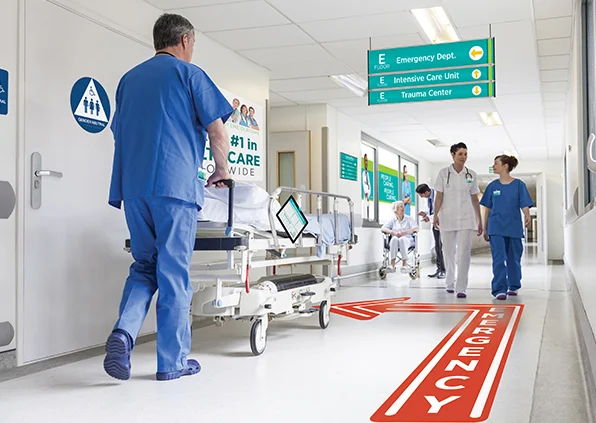
Office wayfinding encompasses every sign that helps people navigate through your corporate space. From elevator lobbies to breakout rooms, consistent wayfinding is essential in larger or multifloor Toronto offices and it’s one of the most overlooked aspects of corporate office signage.
Core Components of an Office Wayfinding System
- Primary identification signs: Reception markers, company or floor identity signs, and directory boards.
- Directional signs: Arrows and text leading to key destinations (washrooms, meeting rooms, departments, elevators, stairs).
- Room and office signs: Nameplates, room numbers, and function labels (e.g., Boardroom A, IT Hub, Wellness Room).
- Regulatory and safety signs: Fire exit signage, emergency procedures, restricted access notices, and hazard warnings.
Best Practices for Office Wayfinding Design
To ensure a cohesive and intuitive system, establish design rules such as:
- Hierarchy and consistency: Use size, color, and placement to distinguish main directional signs from room IDs and regulatory signs, while keeping typography and icons consistent.
- Clear, simple language: Avoid internal jargon. Use easily understood terms like “Meeting Rooms,” “Finance,” or “Reception.”
- Logical routes: Plan signage around actual movement paths, not just the floorplan. Observe how people naturally move through the space.
- Visibility: Place signs at decision points to intersections, elevator lobbies, and corridor splits—with good lighting and at standard viewing heights.
- Scalable numbering systems: Room numbering schemas that can accommodate future expansion or reconfiguration.
Working with a signage partner like Signimpact allows you to map traffic flows and determine exactly where office wayfinding signs should go for maximum impact and minimal clutter.
Visual Standards for Wayfinding Signs
Your corporate wayfinding should feel like an extension of your broader brand identity. Consider defining standards for:
- Color coding: Assign specific colours to floors, departments, or functional zones, while staying within your broader brand palette.
- Icons and pictograms: Use universally recognized symbols for washrooms, stairs, elevators, etc., and keep them consistent in style throughout the office.
- Materials and mounting: Acrylic or metal panels, wall-mounted versus projecting brackets, and whether changeable inserts are required.
- Language: Decide whether signs will be English-only or bilingual (e.g., English to French) and ensure translations are consistent and professionally reviewed.
Accessibility and ADA/AODA Inspired Signage Requirements

While the ADA (Americans with Disabilities Act) is a U.S. regulation, its signage requirements are widely recognized as a benchmark for accessibility. In Ontario, the AODA (Accessibility for Ontarians with Disabilities Act) and the Ontario Building Code set the legal framework. For Toronto offices, aligning your corporate office signage with ADA style best practices while meeting AODA requirements is both a legal and ethical priority.
Accessibility Principles for Corporate Office Signage
An accessible signage program supports people with a range of disabilities, including visual, mobility, and cognitive challenges. Core principles include:
- Readable typography: Sans-serif fonts, adequate character spacing, and consistent letter height.
- Sufficient contrast: Text and symbols must be clearly distinguishable from their background for people with low vision.
- Non-glare finishes: Matte or low-gloss surfaces to avoid reflections that make text unreadable.
- Tactile elements: Raised letters and Braille on key identification signs where required by code.
- Standard placement: Predictable mounting heights and locations at doorways and decision points so users can locate signs by touch or habit.
Where Accessible Signage Should be Used
Exact requirements vary by building type and code interpretation, but most corporate offices should incorporate accessible signage for:
- Permanent rooms and spaces (meeting rooms, washrooms, staff kitchens, storage).
- Exit routes, stairs, and emergency egress.
- Elevators and accessible entry points.
- Areas with restrictions or hazards (e.g., mechanical rooms, server rooms).
A Toronto signage specialist can help interpret the requirements for your specific space, coordinate with inspectors, and ensure your corporate office signage supports both accessibility and brand consistency.
Checklist: Accessibility Features for Corporate Signage
Use this quick checklist to review your existing office signage:
- High-contrast text and background on all critical wayfinding and identification signs.
- Non-glare finish on sign faces, especially in areas with strong natural light.
- Tactile letters and Braille on permanent room signs, mounted at a consistent height beside the latch side of doors.
- Arrows and pictograms that are clear, standardized, and large enough to be legible from a distance.
- Unobstructed view of signs (no furniture or décor blocking visibility).
Signimpact can audit your space and recommend upgrades that align with AODA and ADA-inspired best practices, while still maintaining your corporate look and feel.
Corporate Branding Signs Beyond the Lobby
While lobby signs and directional signage are the backbone of corporate office signage, truly effective environments integrate brand cues throughout the workspace. These corporate branding signs reinforce company culture, share key messages, and turn blank walls into purposeful communication tools.
Branding Opportunities Inside the Office
- Feature walls and brand storytelling: Large format wall graphics that showcase your history, mission, or milestones.
- Value statements and slogans: Dimensional letters or vinyl quotes in collaboration spaces and corridors.
- Department identity signs: Branded markers for HR, Finance, Sales, and Innovation Labs that differentiate zones while staying consistent with your master standards.
- Environmental graphics: Patterns, colour blocking, and subtle icons integrated into glass partitions or wall films to create a cohesive visual language.
In Toronto’s competitive talent market, a thoughtfully branded office can also support recruitment and retention by creating a space that employees are proud to show to clients, partners, and candidates.
Balancing Brand Impact with Practicality
When planning corporate branding signs, consider:
- Durability and changeability: Use long-lasting materials for core messages, and more flexible solutions (such as removable wall decals or changeable panels) for content that may evolve.
- Noise and privacy: Frosted glass films and patterned window graphics can reinforce brand while offering acoustic or visual privacy in meeting rooms.
- Clutter control: Avoid over-signing. A strong corporate office signage standard balances white space with carefully placed brand markers.
Signimpact’s team frequently helps Toronto businesses combine functional signage like office wayfinding with high impact branding elements to create unified, on-brand environments.
Building Your Corporate Office Signage Standards Document
Establishing a formal signage standards document ensures consistency across all your Toronto and GTA locations and streamlines collaboration between marketing, facilities, landlords, and sign vendors.
Essential Sections of a Signage Standards Manual
While every organization is different, comprehensive standards usually include:
- Overview and purpose
- Goals of the signage program (brand consistency, accessibility, safety, etc.).
- Scope (which facilities, regions, and sign types are covered).
- Brand foundations
- Logo usage, colours, and primary/secondary typefaces.
- Minimum size, clear space rules, and incorrect usage examples.
- Sign families and specifications
- Lobby signs, reception markers.
- Office wayfinding: directories, directional signs, room ID signs.
- Regulatory and safety signs.
- Corporate branding signs: feature walls, values, environmental graphics.
- Design and fabrication details
- Standard sizes, materials, and finishes for each sign family.
- Colour codes, mounting methods, and lighting options.
- Accessibility and code requirements
- AODA and ADA-style guidelines your organization has adopted.
- Placement rules, tactile features, and contrast requirements.
- Implementation guidelines
- Approval workflows and points of contact.
- Vendor selection criteria and required shop drawings.
- Maintenance and replacement protocols.
Example Sign Family Matrix
The following conceptual matrix can help you organize your sign types:
| Sign Type | Purpose | Typical Location | Key Specs
|
|---|---|---|---|
| Lobby Logo Sign | Brand identity | Main reception wall | 3D letters, corporate colours, optional illumination |
| Floor Directory | Orientation | Elevator lobby | Changeable inserts, high contrast text, clear layout |
| Directional Signs | Wayfinding | Corridors, intersections | Arrows, icons, bilingual text if required |
| Room ID Signs | Identification | Beside room doors | Tactile text & Braille, consistent mounting height |
| Regulatory Signs | Safety/compliance | Exits, hazardous areas | Code-compliant symbols, durable materials |
| Brand Feature Graphics | Culture & experience | Common areas, corridors | Large-format wall graphics, brand storytelling |
Signimpact can help you turn this framework into a formal, repeatable standards document your team and partners can reference whenever you open, renovate, or rebrand an office.
Working with a Toronto Sign Company to Implement Your Standards
Even the best signage standards need careful execution. Partnering with a local expert ensures your corporate office signage looks good on paper and performs in the real world.
How Signimpact Supports Corporate Office Signage Projects
As a sign shop based in Milton and serving Toronto and the GTA, Signimpact offers end-to-end support tailored to corporate environments:
- Consultation and site surveys: Assessing your space, traffic flow, existing signage, and building rules.
- Design and engineering: Translating your brand into technical sign drawings, material specs, and accessibility-compliant layouts.
- Permit assistance: Coordinating with local authorities and property managers, especially for illuminated or exterior signs that complement your interior program.
- Fabrication: Producing lobby signs, wayfinding systems, window graphics, and wall decals using durable, high-quality materials.
- Professional installation: Scheduling, safety, and precision mounting to minimize disruption to staff and visitors.
Because Signimpact also specializes in storefront signs, channel letters, pylon signs, and vehicle wraps, your corporate office signage can be perfectly aligned with your exterior branding and fleet graphics, creating a truly unified visual identity across every touchpoint.
FAQ: Corporate Office Signage, Lobby Signs, and Wayfinding

1. How early should we involve a sign company when planning a new office?
Ideally, engage a signage partner as soon as you have a floorplan and preliminary interior design concept. Early involvement allows for coordinated placement of power, blocking (for heavy lobby signs), and structural considerations. It also ensures your office wayfinding and accessibility needs are integrated into the design phase rather than added last minute.
2. What’s the typical timeline for corporate office signage in Toronto?
Timelines vary with scope, but a standard process from initial consultation to final installation often runs 4 to 10 weeks. Illuminated lobby signs or complex wayfinding systems may require longer for approvals and fabrication. Working with a local team like Signimpact can shorten turnaround due to proximity and established relationships with GTA landlords and inspectors.
3. How do we ensure our signage is accessible and AODA compliant?
Start by reviewing AODA and Ontario Building Code requirements relevant to your building type, then work with a signage specialist to apply these rules to your floorplan. Focus on tactile and Braille room signs, adequate contrast, non-glare finishes, and consistent mounting heights. Regular audits and updates help maintain compliance as your office evolves.
4. Can we update our signage standards without a full rebrand?
Yes. Many organizations refresh their corporate office signage standards to improve accessibility, clarity, or aesthetics while keeping their core logo and colours. You can standardize sizes, materials, and layouts, update wayfinding logic, and add new corporate branding signs without changing your underlying brand identity.
5. What budget range should we expect for corporate office signage?
Costs depend on office size, sign quantity, materials, and complexity. A modest single-floor office might invest in a primary lobby sign and basic wayfinding, while multifloor headquarters will require more extensive systems. A consultation with Signimpact can provide a phased budget, allowing you to prioritize safety and accessibility first, then add brand enhancements over time.
Conclusion: Elevate Your Corporate Office Signage in Toronto
Corporate office signage spanning lobby signs, office wayfinding, and accessibility-focused elements is a strategic asset for any Toronto business. When you establish clear standards, your offices become easier to navigate, more welcoming, legally compliant, and perfectly aligned with your brand everywhere they appear.
By investing in high-quality lobby signs in Toronto, well-planned directional systems, and accessible features inspired by ADA and mandated by AODA, you create a professional environment that supports employees, impresses visitors, and protects your organization.
If you’re ready to formalize or upgrade your corporate office signage, the team at Signimpact can help you design, fabricate, and install a comprehensive program tailored to your Toronto or GTA locations. To see how interior signage fits into a complete branding ecosystem from exterior storefronts to vehicle wraps explore the main resource: Read complete overview: “Ultimate Guide: Sign Company Toronto for Custom Business Signs and Commercial Signage Solutions.”
Thoughtful corporate office signage is one of the most visible, enduring investments you can make in your brand on every floor, in every office, across every city you call home.