Planning a new sign often starts with one big question: what will it cost? While no two projects are identical, you can understand how typical ranges form by looking at size, materials, illumination, fabrication methods, permitting, and installation complexity. This article explains how a custom business sign company estimates budgets in the Greater Toronto Area and what you can do to shape costs without sacrificing impact. We will keep the discussion practical and educational so you can plan with confidence. For context, Sign Impact is a Milton-based shop serving Toronto and the GTA; the insights here reflect common steps and variables seen across the region. Use this guide as a roadmap for setting a smart range before you request quotes.
Quick Summary
Typical sign pricing ranges are built from a few core inputs: scope, materials, lighting, fabrication method, permitting, and installation conditions. Outdoor signs like channel letters, fascia, pylon, and blade signs vary widely depending on size and illumination, while indoor graphics such as window films and wall decals are guided by coverage, vinyl type, and surface prep. Permits and engineering can influence both timeline and budget. To build a realistic range, define must-haves, gather brand assets, note site constraints, and consider phased approaches. This guide clarifies how ranges form so you can speak with a business sign company using shared language and expectations, and it complements the broader process of choosing the right sign partner for your needs.
What Drives the Price of a Business Sign in the GTA
Sign budgets are shaped by scope and execution choices. Size, viewing distance, and readability targets set core dimensions, and materials like aluminum, acrylic, vinyl, and composites influence durability and finish. Lighting adds complexity; illumination choices such as front-lit, back-lit, or halo-lit increase components and labor. For a deeper look at evaluating vendors and processes, see the Complete Guide To Choosing The Right Sign Company For Your Business.
Fabrication method matters too. CNC routing, laser cutting, and formed letters add precision and polish, while simple flat signs are more economical. Coatings and finishes like paint, powder coat, or specialty laminates add resilience and style, but they also affect lead time and handling. Packaging and transportation are part of the equation for larger builds.
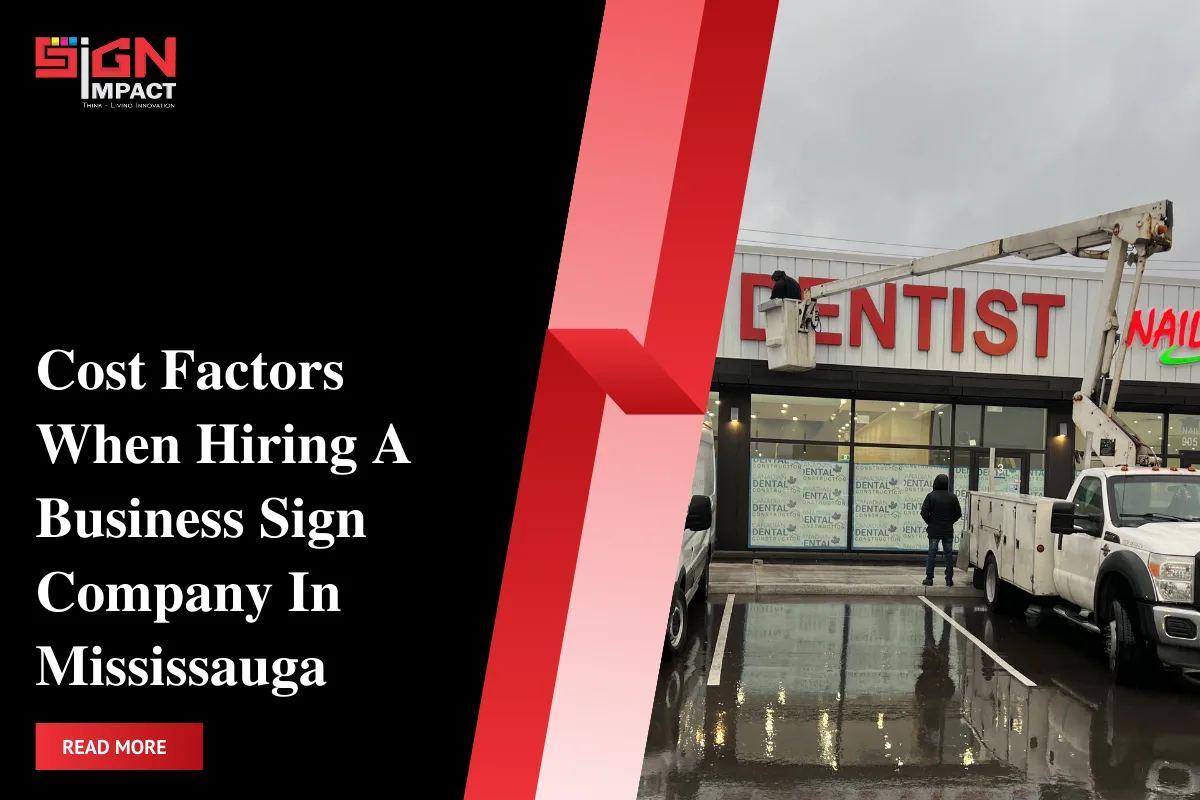
Installation conditions round out the range. Ground-level installs are generally simpler than high-elevation or rooftop placements. Access equipment, electrical connections, wall or substrate condition, and any special safety measures can change crew size and timeline. In dense urban areas of the GTA, traffic management or after-hours work may also influence cost and scheduling.
Pricing Tiers Explained Without Numbers
Instead of fixed prices, think in tiers that align with goals. An entry tier emphasizes essential visibility and durability; a mid tier blends design detail with lighting options; a premium tier maximizes brand presence with advanced fabrication and finishing. This lens helps you match intent to investment while reserving room for design scope refinements.
| Tier | Relative Cost | Typical Materials | Lighting | Fabrication Complexity | Common Use Cases |
|---|---|---|---|---|---|
| Economy | Low | Vinyl, basic aluminum or ACM | None or minimal | Simple cuts, standard finishes | Temporary needs, budget-conscious updates |
| Standard | Medium | Acrylic, aluminum, premium vinyl | LED options common | Routed letters, layered builds | New locations, long-term branding |
| Premium | High | Thicker acrylic, steel accents, specialty films | Advanced front/halo combinations | 3D letters, custom structures, specialty finishes | Flagship storefronts, landmark visibility |
Outdoor Sign Types and How Their Ranges Differ
Outdoor signs carry broader visibility demands, weather exposure, and, often, illumination. Fabricated channel letters typically sit in the mid to premium tier due to materials, LEDs, and precision mounting. Fascia or panel signs can span economy to premium depending on size, layering, and lighting. Blade or projecting signs require engineered brackets and may involve more complex installation.
Pylon and monument signs operate as structures, not just faces. They can include masonry elements, cabinet fabrication, illumination, and foundation work. These projects sit higher on the range due to engineering and installation equipment. For any outdoor sign, remember that inspection access, power runs, and building conditions influence labor and scheduling.
When planning outdoor visibility across the GTA, consider urban viewing distances and nighttime legibility. Halo-lit letters and front-lit cabinets achieve different effects; choosing between them balances brand style and maintenance. Discuss serviceability, such as removable faces or access panels, to keep long-term upkeep in mind when setting your initial range.
Indoor Signs and Graphics: Cost Patterns That Matter
Indoor environments shift the cost drivers. Vinyl window graphics range based on coverage, film type, and installation complexity around mullions and hardware. Wall decals and murals add creative impact; premium films, color accuracy, and lamination elevate longevity and finish.
Dimensional interior letters and reception signs introduce layered materials like acrylic, standoffs, and backers. LED backlighting for interior features adds controlled ambience and requires power access planning. While interior installs are often simpler than exterior, surface prep and precise alignment still shape labor time and quality.
Window films for privacy or solar control are another category. Specialty films with specific light transmission or frosted effects cost more than standard vinyl. Coverage area and edge detailing near frames and seals influence both material usage and installation detail, guiding the final range.
Permits, Engineering, and Compliance in the GTA
Many exterior signs require municipal approvals. Submissions, drawings, and potential permit fees affect both timeline and budget. Understanding what your municipality expects helps you plan realistic ranges and avoid delays once fabrication is ready to start. Even for interior projects, landlord approvals and building guidelines may apply.
According to the City of Toronto, numerous sign types require permits, and applications must meet local sign bylaws and safety standards, which can affect project timing and documentation requirements (City of Toronto, n.d.). City of Toronto Sign Permits
Across the GTA, engineering may be needed for structural elements, wind load considerations, or mounting on specific building materials. Your planning range should include room for drawings, revisions, and any site-specific constraints discovered during surveys. Clear expectations reduce surprises at approval or installation stages.
Installation Factors That Influence Your Budget
Installation complexity often separates initial estimates from final quotes. Ground-level mounting with simple access is typically straightforward. High-elevation or rooftop installs require lifts, certified crews, and sometimes road or sidewalk control. The more specialized the equipment, the more planning the schedule will require.
Power availability also matters. Coordinating electrical work for illuminated signs can involve licensed trades, timing with building management, and after-hours access. Structural backing or reinforcement may be necessary depending on wall condition and sign weight. Each of these items adds coordination steps that shape both range and timeline.
Finally, weather and season can play a role. For exterior work, extreme cold or precipitation can impact adhesives, coatings, and safety. While crews plan around conditions, tight deadlines during challenging seasons may require contingency time. Building a realistic range means planning for these practical on-site realities.
Framework: Build a Realistic Sign Budget in 7 Steps
A simple process helps you set a range that aligns with goals, approvals, and schedules. Use this framework before requesting quotes so conversations are clear and actionable. Treat it as a working document you can refine as new details emerge.
- Define scope anchors
List must-have elements like size, placement, lighting, and brand colors. This is your scope definition baseline. Separate nice-to-haves to allow flexible value tradeoffs later without stalling approvals.
- Gather brand assets
Compile vector logos, brand guidelines, and color references. Accurate files cut design time, reduce revisions, and support material choices that match your brand consistently.
- Assess the site
Take clear photos with measurements and note access constraints and power availability. This context makes early estimates more accurate and flags installation complexity sooner.
- Pick a visibility target
Consider viewing distance and daytime versus nighttime legibility. Decide if illumination is essential, optional, or out of scope so material and fabrication paths are aligned.
- Choose a tier
Use economy, standard, and premium tiers to set expectations. If you need help comparing vendors and processes, refer to the complete guide on this topic for broader selection criteria.
- Plan approvals and timing
Map permit needs, landlord requirements, and internal sign-offs. Align deadlines with fabrication windows to avoid rush costs and to schedule installation predictably.
- Reserve a contingency
Hold buffer room for unforeseen site conditions or material substitutions. A small contingency protects your schedule and avoids last-minute compromises on quality.
When to Consult a Sign Partner and What to Prepare
Engage a partner once you have the basics captured: photos, measurements, logo files, and a tier preference. A thorough site survey will confirm mounting conditions, power paths, and any structural needs. Sharing your timeline and internal approvals helps your partner plan sequencing and coordinate with property managers.
If you are comparing options, ask for alternative materials or lighting paths that achieve similar visual results. A good estimator will explain tradeoffs and suggest phasing when appropriate. When you are ready to explore execution details, a custom business sign company can translate your scope anchors into shop drawings and a predictable schedule.
As you review proposals, look for clear line items describing fabrication, finishes, lighting components, permits, and installation. Transparent scopes reduce change orders. If two quotes differ greatly, revisit assumptions about size, materials, or installation to understand why ranges diverge.
Budget Control Tips and Value Tradeoffs
There are practical ways to align budget and brand quality. Consider value engineering swaps like thicker premium vinyl in high-wear zones and standard vinyl elsewhere. Evaluate whether illumination can focus on primary signage while secondary signs remain non-lit.
Explore modular designs that accept updates without replacing an entire sign, such as changeable tenant panels or replaceable faces. Where timelines are tight, phasing core elements first and enhancements later can protect openings without sacrificing the final look.
Finishes also offer room for balance. Powder coating or high-quality paint can achieve a refined appearance without specialty metals, depending on design goals. Sampling materials and reviewing mockups reduces rework and keeps fabrication efficient.
Frequently Asked Questions About Sign Pricing in the GTA
- Why do quotes vary so much between providers?
Differences usually come from materials, illumination components, fabrication methods, and installation assumptions. Clarifying scope details and asking for line-item breakdowns helps you compare like-for-like and understand where ranges diverge.
- How early should I start planning for an exterior sign?
Start once your lease, branding, and opening timeline are clear. Lead time depends on design, permits, fabrication, and installation scheduling. Early planning reduces rush costs and avoids bottlenecks later.
- What are the biggest cost drivers for channel letters?
Letter size, stroke width, illumination style, returns material, and mounting method are primary drivers. Access to power, wall conditions, and elevation also affect installation time and overall range.
- Do indoor graphics require permits?
Most interior graphics do not, but property managers or landlords may have guidelines on adhesives, materials, and installation times. Always confirm building rules before scheduling work.
- How can I create a budget without exact drawings?
Use clear photos, rough measurements, and a tier preference to obtain preliminary ranges. This allows you to refine the scope and get design started while maintaining realistic expectations.
- What maintenance should I plan for illuminated signs?
Plan for periodic cleaning, inspection of power supplies and wiring, and addressing any moisture ingress. Using quality LEDs and proper sealing helps minimize long-term maintenance needs.
- Can I reduce cost without sacrificing brand quality?
Yes. Focus premium materials and lighting where they matter most for visibility, and use standard options elsewhere. Modular designs and smart finish choices can protect brand consistency and budget.
- How does installation timing affect budget?
After-hours or high-elevation installs may require additional equipment or crew arrangements. Planning schedules early and coordinating with building management helps avoid time-related premiums.
Conclusion
There is no one-size-fits-all price for signage, but understanding the drivers behind typical ranges puts you in control. By thinking in tiers, defining scope anchors, and evaluating materials and illumination choices, you can set realistic expectations before you seek proposals from a custom business sign company. Clear site information, early permit planning, and transparent quotes help ensure your budget reflects the actual work required.
Use the ideas here to discuss options with a custom sign company, a business sign company, a commercial sign company, or a sign-making company as you refine your plan. If you want a broader perspective on vendor selection and process, remember the principles outlined in the pillar content about choosing the right sign company. When you are ready to move forward, contact Sign Impact for expert assistance so your design, approvals, and installation align with your goals and timeline in the GTA.